Richard Bruno
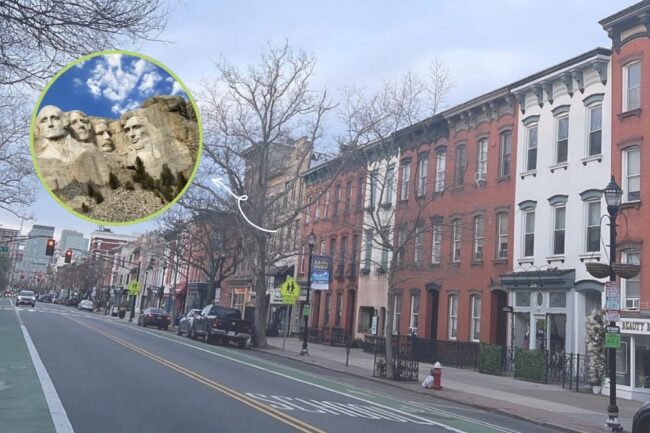
On a stroll down Washington Street, one might notice a pattern in the names of the cross streets: Jefferson, Adams, Madison, Monroe. It’s a veritable presidential parade through the heart of Hoboken, but why? The answer begins more than 200 years ago, with a visionary family, a ferry stop, and a plan to turn a patch of marshland into a thriving riverside city. Read on for more about why Hoboken has so many streets named after United States Presidents.
In 1784, following the Revolutionary War, Colonel John Stevens purchased the land that would eventually become Hoboken at a public auction. At the time, the area was largely undeveloped — a patchwork of tidal marshes, farmland, and riverbank. Despite these natural limitations, Colonel Stevens envisioned something greater: a modern, organized city along the Hudson River that could serve both commercial and residential purposes. He and his sons began laying the groundwork in the early 1800s to make that vision a reality (fun fact: on October 11th, 1811, the Stevens’ ship the Juliana, began to operate as a ferry between Manhattan and Hoboken, making it the world’s first commercial steam ferry).
Read More: Presidents Who Have Visited Hoboken + Jersey City
In 1804, Colonel Stevens hired surveyor Charles Loss to create Hoboken’s first official city plan. The result was the “Loss Map,” which introduced a now-familiar north-south/east-west street grid featuring numbered east-west streets and named north-south avenues. This orderly layout was designed to sell lots and attract new residents to the area. And while Hoboken’s layout has evolved, the foundational grid — and many of the original names — remain unchanged.


Running through the city’s north-south avenues is a clear theme: names of early U.S. Presidents. These include Washington, Adams, Jefferson, Madison, Monroe, Jackson, and Harrison. While there’s no surviving documentation explicitly detailing who chose the names or why, the 1804 Loss Map includes these names, confirming that Charles Loss was responsible for implementing them. However, many historians and local experts believe the Stevens family, known for their patriotism and ties to early American industry and politics, were the ones who selected the names in the first place.

Using presidential names for streets was a common practice in the 19th century, especially in newly developing cities. It served to instill a sense of national identity, order, and civic pride. According to the Hoboken Historical Museum, naming streets after presidents would have aligned with the ideals of the time and echoed the street-naming conventions seen in cities like Washington, D.C., Philadelphia, and New York.
The naming pattern may have also served a more practical purpose. With numbered east-west streets and presidential-named avenues running north to south, the grid system helped make Hoboken feel accessible, navigable, and welcoming to newcomers, especially ferry riders arriving from Manhattan.
Not every street in Hoboken follows the presidential pattern. Streets like Garden, Bloomfield, and Willow — located east of Washington Street — lean more toward aesthetic or nature-inspired themes. These names may reflect Hoboken’s earliest roots as a landscaped garden estate. The area was once home to the “Elysian Fields,” a public promenade and recreation ground that predates the modern grid. These natural street names may have been retained intentionally, preserving a piece of Hoboken’s pastoral past amidst its urban transformation.
See More: Exploring Bloomfield’s Broad Street: 36 Spots to Visit
Today, Hoboken’s street names serve as more than just coordinates — they are markers of identity, intention, and history. What began as a practical city plan to attract residents has become a lasting narrative etched into the city’s grid. So, whether locals are rushing to the PATH train or strolling to a bakery, they’re walking on roads that carry more than just foot traffic. In Hoboken, even the pavement tells a story.
Follow @thehobokengirl on Instagram + TikTok for the latest Hoboken and Jersey City updates, sign up for our weekly newsletter here that shares everything you missed each week, and check out our events calendar, which has over 100+ events weekly to peruse.