Evin Lawlor
Cities are often understood from a wide lens – flashy monuments and expansive skylines. Hoboken is packed with small historical and architectural details that we walk by every day without even noticing. Even as an architect and resident of Hoboken, I sometimes find myself sprinting through the streets, rarely taking the time to fully appreciate the intricate details that give us a glimpse into this city’s history. As an opportunity to be more present in our city, here are seven of my favorite details that I feel like tell the best stories about craftsmanship, design, and history in Hoboken.
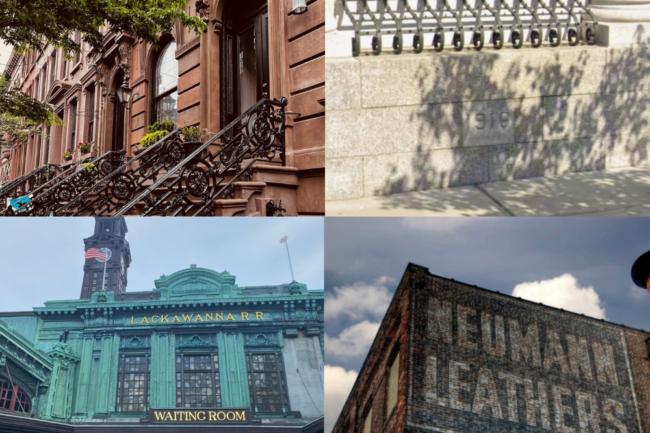
1. The Cornices
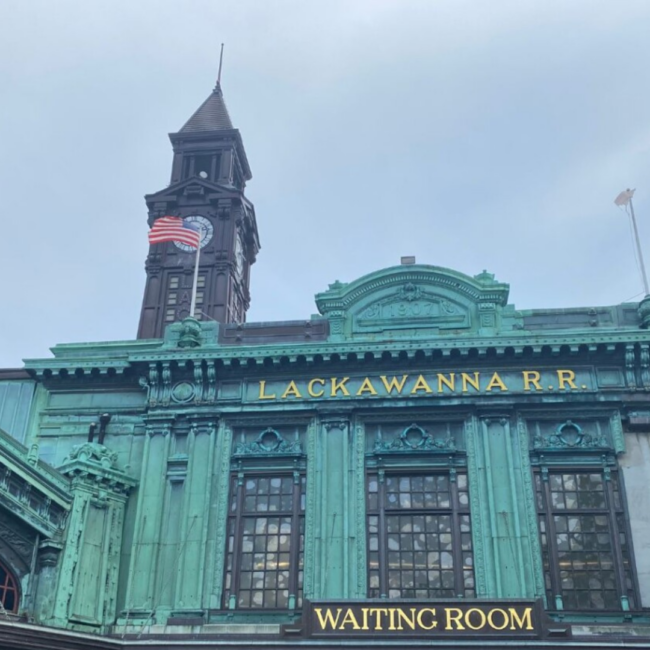
Ever notice the decorative projections towards the top of Hoboken Terminal? That’s a cornice – any horizontal decorative moulding that crowns a building. The concept of the cornice dates back to ancient civilizations. These early cornices served a practical purpose – they helped support the roof and channel rainwater away from the walls.
Hoboken is dense with narrow 19th / 20th century buildings that display decorative cornices, either constructed with wood or metal if the client at the time had the budget, displaying wealth and prosperity, and giving builders an opportunity to show off their craftsmanship. It creates a clear termination point at the roofline, giving rowhouses and apartment buildings a sense of completion and proportion. It essentially serves as the crown of the building, and without cornices, I feel like the typology of houses created within Hoboken would look quite bare and flat.
Read More: 14 DIY Activities to Try in Hoboken + Jersey City
Cornices help preserve the historic character of the city’s rowhouse neighbourhoods, which helps preserve the architectural identity that was started and maintained since the late 1800s. As you walk down streets such as Washington, you are welcomed to a continuous horizontal rhythm, which really helps make Hoboken’s streets feel visually cohesive. My favourite cornices would have to be Hoboken Terminal, Hoboken City Hall, and TD Bank.


2. Transom Windows
While walking past rows of brownstones, next time notice the small window above the entry doorframe – that’s a transom window. These windows allow light and ventilation into the entrance corridor. In brownstones, the hallway is often long and narrow, so the introduction of the transom allowed for a more pleasant transition. Beyond the functional purpose, transoms allow architects to experiment with a number of factors and get creative with different types of glass, patterns, and overall styles.

3. Window Sill
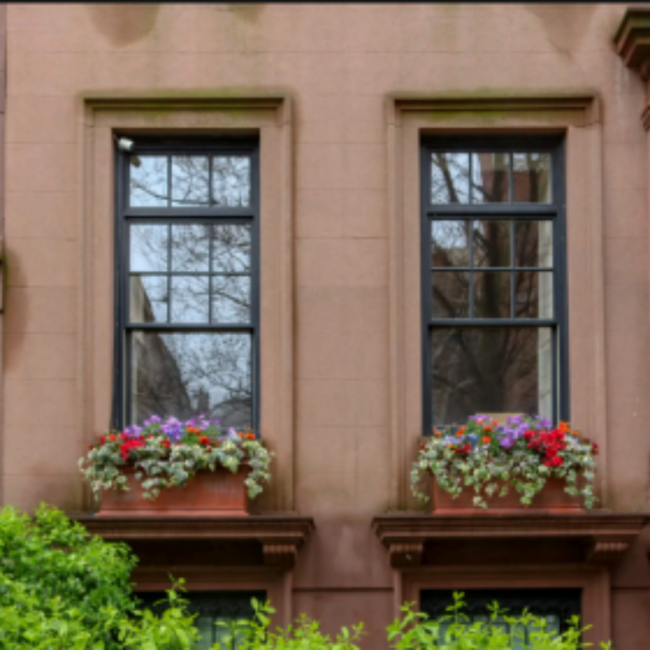
You’ve likely heard of a window sill, but have you ever thought about why we have them? Not only do window sills play an important functional role by stopping water from flowing into the window, but they also play a subtle role in the visual composition of our local facades. Despite being a small detail in the grand scheme of a building, many sills demonstrate a level of care and craftsmanship, especially in Hoboken rowhouses and brownstones. These sills are made from durable materials like limestone and feature round edges along the front edges. These molded shapes create shadows along the sill and soften the transition from window to brick.
4. Brownstone Stoop
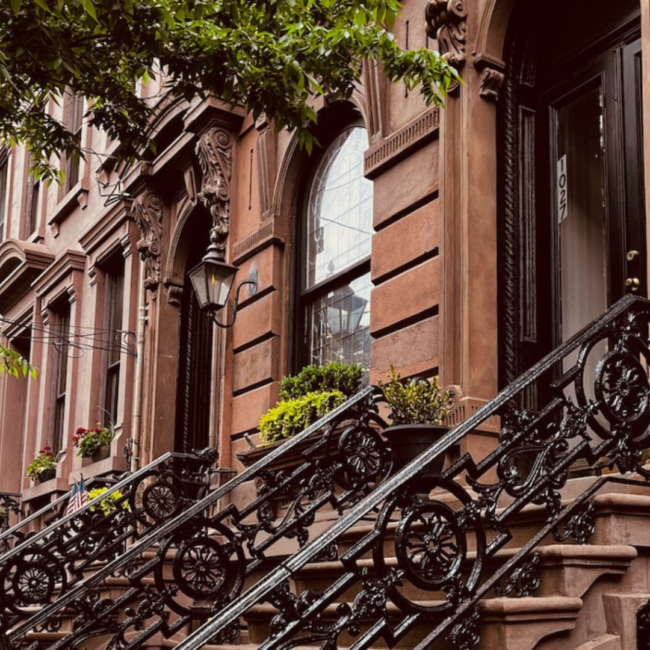
The brownstone stoop – likely everyone’s (and my) favorite architectural feature in Hoboken. The majority of the brownstones within Hoboken were built in the late 19th century. It’s a transition between public and private, going from chatting on the sidewalk to taking it to a more intimate seated stoop.
The brownstone steps were derived from the Georgian terraces seen in Europe. These steps leading up to the front door were seen as a place of interaction. Their graceful, curved cast iron railings showcase delicate Victorian scrollwork and looping patterns. On the sides of these stoops, you’ll notice iron posts that anchor the railing. These ornate railing edges, often rounded shapes, add a sense of formality to the entrance.
Unfortunately, new buildings have phased out these stoops for a number of reasons, generally due to accessibility laws, and to allow for more interior space as land became more expensive.
5. Architectural Lintels
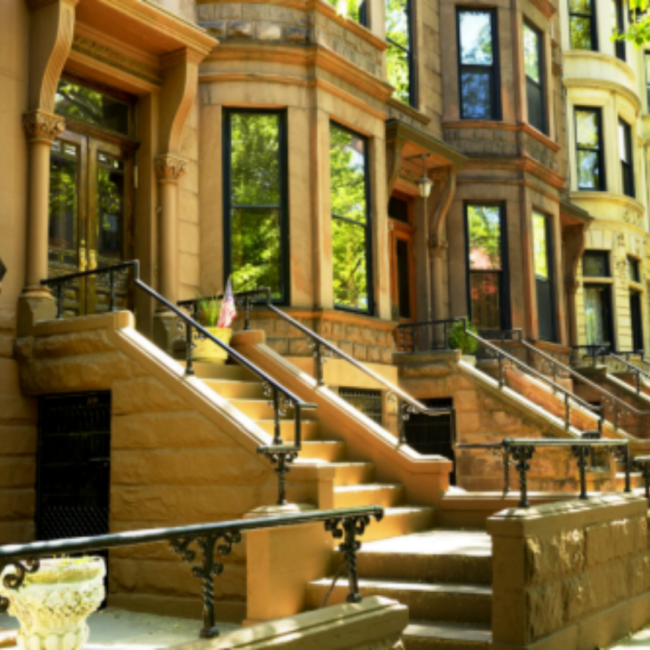
Look above the windows in Hoboken for lintel beams, horizontal components to support the window or door above. These lintels can often protrude out to the facade and leave a visible mark above doors and windows, showcasing decorative details. A selection across Hoboken has carved moldings, keystones, or slightly arched profiles that showcase a period of time where craftsmanship was more sought after, and there was a deeper appreciation for the finer details. Shoutout to especially ornate lintels above Second Street, at 202 Washington Street.
6. Date Stone
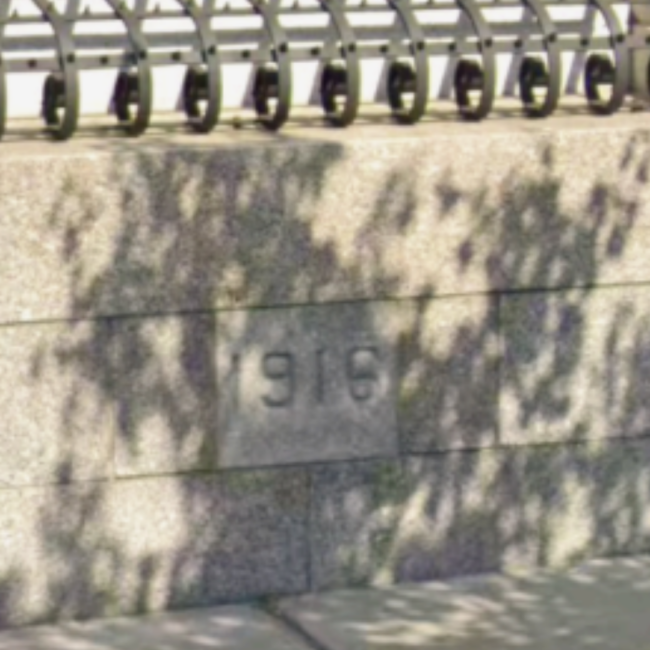
On the larger buildings around Hoboken, you will notice at times a small carving on the stone. This carving often represents the year the building was constructed, and at times will also have the name of the building. For pedestrians walking through Hoboken, the stones quietly tell the story of when and how the city grew. Some of my favorites are the etched “Hoboken Bank of Savings” on the current Whole Foods building, and the 1531 on the United States Postal Office on River Street.
7. Brick Patterns
At first glance, all the brick patterns used in Hoboken’s buildings are the same. However, there are multiple brick patterns that have been used across Hoboken. A common brick pattern you will see is the running bond – it consists of brick laid in a staggered formation with each brick overlapping the brick below. But on some older buildings, bricklayers added more decorative patterns, such as alternating brick ends, creating textured bands, or building small geometric rhythms into the façade.
The Neumann Leathers building is a prime example of this decorative pattern. The construction technique incorporates the English bond – consists of alternating courses of headers and stretchers providing structural stability.
Though easy to go unnoticed, the architectural details scattered across Hoboken showcase how rich in history the city has been, preserving these finer details that give Hoboken its character. These small, finer details evoke a memory of a time when craftsmanship and thoughtful design were woven into our everyday fabric. The next time you walk through Hoboken, looking up or down for these subtle details might reveal that the city’s most fascinating stories are often hidden in plain sight.
See More: Who Owns Ellis Island? Revisiting the 1998 Case Between NJ + NY
Follow @thehobokengirl on Instagram + TikTok for the latest Hoboken and Jersey City updates, sign up for our weekly newsletter here that shares everything you missed each week, and check out our events calendar, which has over 100+ events weekly to peruse.