Eliot Hudson
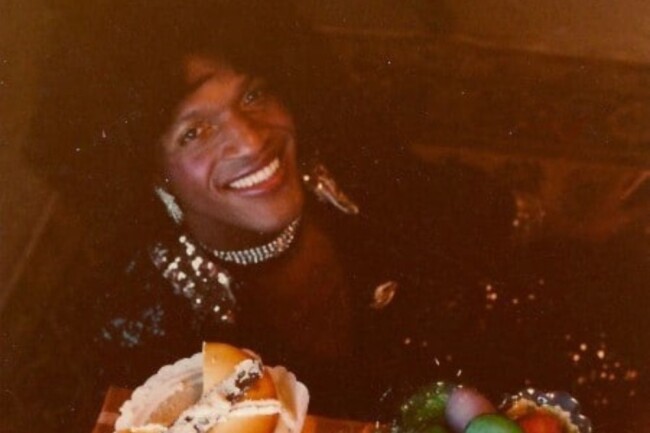
Long before RuPaul sashayed from the runway and into America’s hearts, there was Marsha P. Johnson and a deep connection to Hoboken. But what did Marsha, the “true Mother of Drag” according to RuPaul, have to do with Hoboken? It may surprise readers that perhaps the most important and famous trans woman in history — a trailblazer in her time — found solace in Hoboken. Today, murals and monuments around the globe celebrate Marsha P. Johnson, the trans woman who fought for her rights during and after the Stonewall Uprisings. While this world-renowned activist had once been homeless, she made Hoboken her home. After locals advocated for Marsha to receive a memorial in the Mile Square in recent years, the Hoboken City Council approved the building of a statue at Stevens Park in 2024, right outside of where she once lived. Read on to learn about the new statue as well as Marsha P. Johnson’s connection to Hoboken, New Jersey.
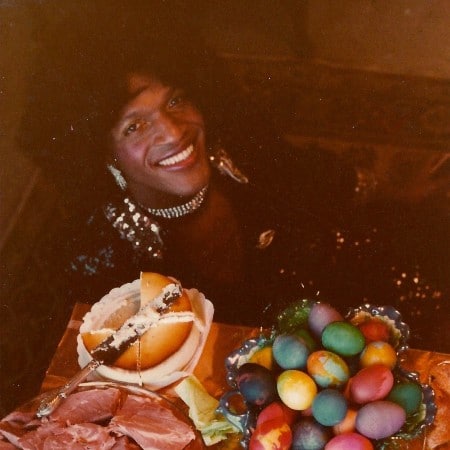
Photo Credit: Randy Wicker
The Statue
In previous years, there have been calls to create a memorial to Marsha P. Johnson in Hoboken, including a petition on change.org that received over 9,000 signatures. Locals agreed that Stevens Park, which is outside of 1 Marine View Plaza (where Marsha lived) and across from Saints Peter and Paul Church (where she worshiped), would be a great candidate to be renamed in her honor.
At a meeting in 2024, the Hoboken City Council unanimously approved the building of a $250,000 statue of Marsha that will be displayed at the park. A specific location for the statue has not been announced yet. According to sculptor Alvin D. Pettit, who is creating the monument, it will be Hoboken’s first sculpture paying tribute to an LGBTQ+ historical figure, and will stand 11 feet tall.
Read More: LGBTQ+-Owned Businesses to Support in Hudson County


Living As Her True Self
Marsha P. Johnson was assigned male at birth and born on August 24th, 1945, in Elizabeth, New Jersey — and in 1945, no one could have imagined the profound effect she would have on the LGBTQ+ community as a trans and gay rights activist. Not only did she help lead the Stonewall Uprising of 1969, but she also became a leader of the movement.

Known as the “Mayor of Christopher Street,” she co-founded the activist group Street Transvestite Action Revolutionaries (S.T.A.R.) and established the STAR House, the first-ever shelter for unhoused gay and trans youth in 1970. She even modeled for Andy Warhol, and appallingly, she was often turned away from galleries displaying her own portrait.
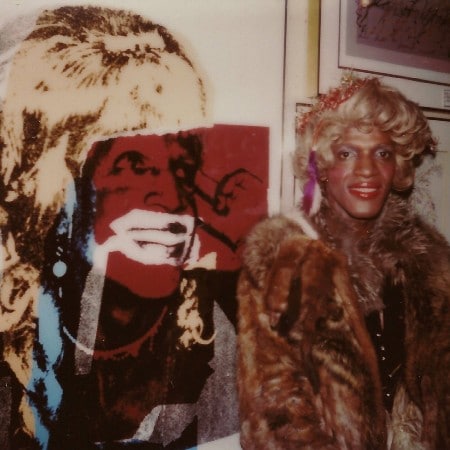
Photo Credit: Randy Wicker
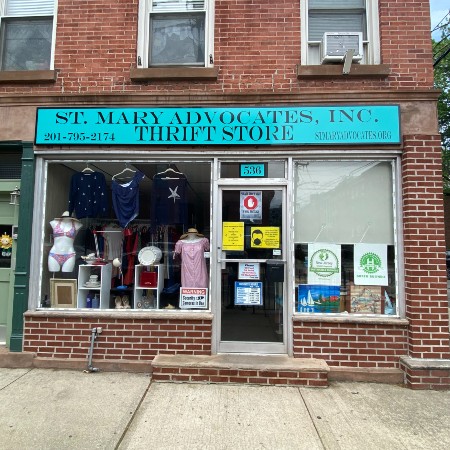
When Marsha first began living life as a trans woman in 1966, “transgender” was not even a word commonly used, yet she assumed female pronouns and proudly called herself gay, a transvestite, and a queen. She became known for wearing crowns of flowers and drew attention with robes, shiny dresses, plastic heels, and fingernails painted as red as the blood she would shed for her cause. Many of her fashion choices were purchased from her favorite store in Hoboken, St. Mary Advocate’s Thrift Store at 536 Garden Street.
Despite being a predominant figure at the Stonewall Uprising, in 1973, Marsha was banned from participating in the Gay Pride Parade because the gay and lesbian organizers feared trans people would “give them a bad name.” In response, Marsha marched defiantly ahead of the parade.
Marsha + Randy Wicker
Marsha’s life embodied all the trials and tribulations of a trans woman of her era. As a marginalized member of society who often found herself with nowhere to live, she turned Hoboken into her home. In 1980, not only was she invited to ride in the lead car of New York’s annual Gay Pride Parade, but she also began living in Hoboken at 1 Marine View Plaza with her close friend, Randy Wicker, for the remainder of her life. For 12 years, two of the most famous and revolutionary LGBTQ+ activists lived together as roommates in Hoboken.
Randy himself was the first openly gay man in New York City, the first openly gay person on East Coast television in 1964, and is currently the last living member of the world’s first gay rights protest, the “Sip In” at Julius’ Bar in Manhattan in 1966 (three years before the Stonewall Uprising).
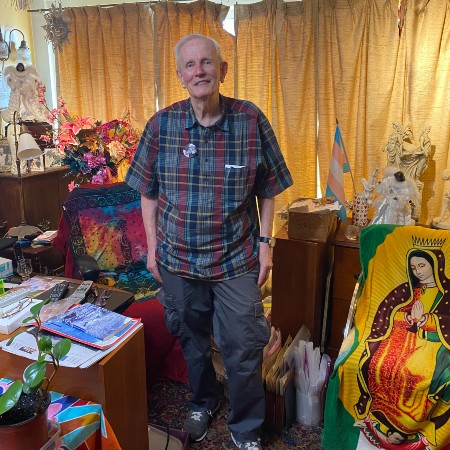
Marsha and Randy experienced the AIDS crisis together in Hoboken. Marsha cared for Wicker’s lover, as he died of AIDS at 1 Marine View Plaza, and her faith helped carry her through the trauma.
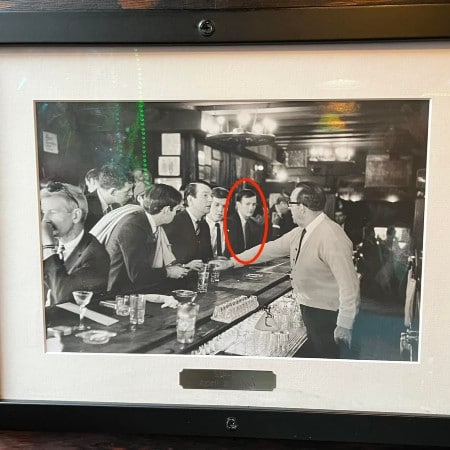
^ The Sip In. Photo Credit: Randy Wicker
Marsha’s Religious Roots
Deeply religious, Marsha could be found lighting candles at the Catholic Community of Saints Peter and Paul Church in Hoboken while grieving for her friends, both suffering from and being taken by the AIDS epidemic.
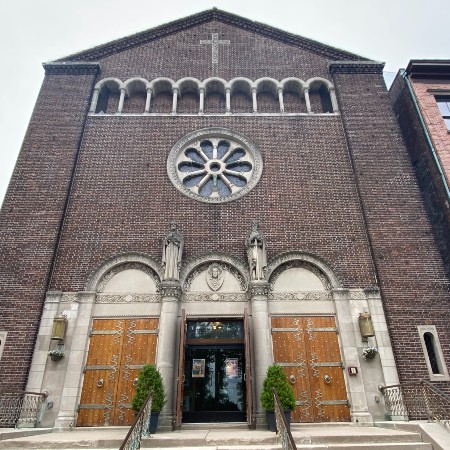
Other times, she could be found prostrate before the statue of the Virgin Mary. This makes Saints Peter and Paul Church something of a gay shrine and a monument for all of the martyrs who suffered during the AIDS crisis. Randy firmly believes Marsha will become the first trans saint.
In a 1992 interview, Marsha explained her religiosity: “I got the Lord on my side, and I took him to my heart with me and I came to the city, for better or worse. And He said, ‘You know, you might wind up with nothing.’ ‘Cause you know, me and Jesus is always talking. And I said, Honey, I don’t care if I never have nothing ever ‘til the day I die. All I want is my freedom.”
The Cost of Fighting for Freedom: Marsha’s Legacy
Marsha fought for the freedom she so desperately wanted, and perhaps at the cost of her life. In 1992, a plague of gay-bashing swept New York. In that year alone, New York City reported 1,300 biased crimes against the LGBTQ+ community, and according to Matt Foreman, the former director of the Anti-Violence Project, 18% of those were perpetrated by police.
In response, Marsha and many activists took to the streets to demand justice. Weeks later, Marsha was found dead, floating in the Hudson River by Chelsea Piers. The circumstances of her death have been the subject of a Netflix documentary, The Death and Life of Marsha P. Johnson (2017). Her body was cremated and her ashes spread over the Hudson River. Her funeral procession closed down 7th Avenue in Manhattan.
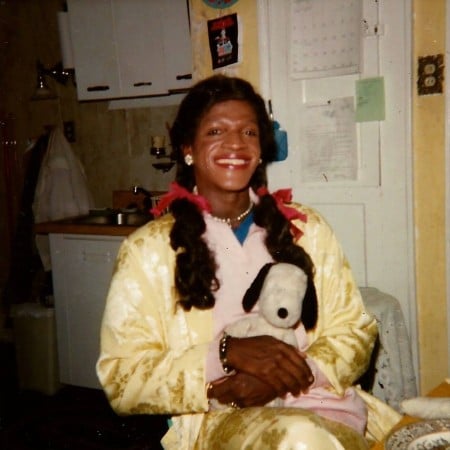
Photo Credit: Randy Wicker
Marsha has been honored as a Google Doodle and even has a park named after her in Brooklyn (despite rarely spending time in Brooklyn), yet there were no memorials of or remembrances of her in Hoboken — but now there will be, soon.
Marsha P. Johnson was included in the inaugural Fifty American “pioneers, trailblazers, and heroes” induction on the National LGBTQ Wall of Honor within the Stonewall National Monument in Manhattan.
See More: LGBTQ+-Owned Businesses to Support in Essex County
Follow @thehobokengirl on Instagram + TikTok for the latest Hoboken and Jersey City updates, sign up for our weekly newsletter here that shares everything you missed each week, and check out our events calendar, which has over 100+ events weekly to peruse.