 Erin Lanahan
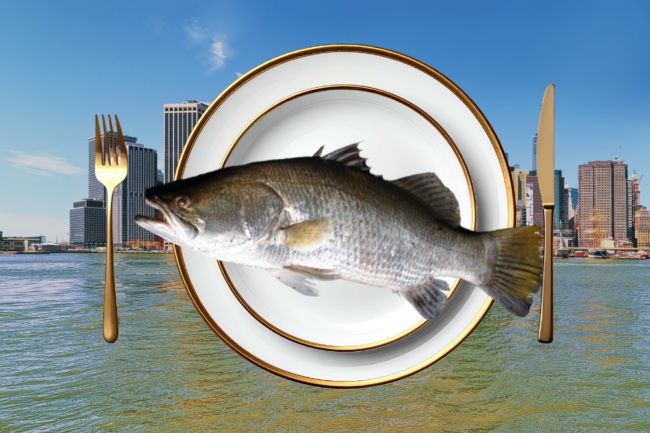
For the first time in 50 years, you could eat fish caught in the lower Hudson River. (Not that you need to, but we’re learning the option is there.) It’s a sign that nature is healing, but Hoboken residents may already know that due to the wildlife popping up in recent years. The New York State Health Department gave the green light due to declining levels of chemicals found in some of the fish, making it safer for consumption. Here’s what to know about the updated guidance surrounding eating fish from the lower Hudson River.
Fresh Fish Guidance
This is no April Fool’s joke. On April 1st, 2026, the New York State Department of Health released updated advice for eating fish caught in bodies of water statewide, including the lower Hudson River. This guidance applies to certain fish caught from the Rip Van Winkle Bridge in Catskill, all the way down to Battery Park in Lower Manhattan.
The Department of Health says the sensitive population, being pregnant women and children under 15, is safe to eat up to one 8-ounce meal a month of striped bass, as well as some other fish from this portion of the river. The general population is allowed to eat up to four meals a month.
The report cites declining levels of polychlorinated biphenyls (PCBs) found in some fish in the lower Hudson River make it safe for consumption. PCBs are a group of man-made, synthetic organic chemicals consisting of carbon, hydrogen, and chlorine atoms. PCBs were used from the 1930s to the 1970s in many different ways, such as coolants and lubricants in electrical equipment, or found in paints and sealants. These chemicals were banned in 1979 in the United States due to their toxicity and negative impact on the environment.
There are still some fish not recommended to eat due to PCB levels, like Carp and Smallmouth bass from the Lower Hudson.


”It’s a great day when the Department can relax guidance for certain fish in the lower Hudson River, allowing people who may become pregnant and children to eat fish from one of the most important fisheries in New York State,” State Health Commissioner Dr. James McDonald said in an online statement.
PCBs typically stay in the fat of the fish. The Department of Health recommends that those eating these fish cut the skin and fat off first, then cook them so the fat drips off. It will reduce the amount of PCBs in the meal by roughly half, according to the Department of Health.

“New York’s waterways are world-renowned for abundant fishing opportunities. It remains critical to advise of any potential health risks from contaminants that may build up in fish tissue in certain bodies of water so that anglers can make well-informed choices about consuming their catch,’ said Department of Environmental Conservation (DEC) Commissioner Amanda Lefton in a statement online. “DEC prioritizes cleaning up contaminants and restoring water quality to support fish consumption and will continue to work with our partners at the Department of Health to track and address harmful contaminants and use the latest science and data to help protect public health and our shared environmental resources.”
Fishy Characters Found Along Hoboken’s Waterfront
While this is shocking news to learn, it may not come as a surprise to some. We’ve seen signs that the lower Hudson River is healing in recent years, with wildlife popping up around the Hoboken area.
In 2021, readers spotted a sturgeon swimming in the water, joking that it was a prehistoric animal. The Atlantic Sturgeon’s natural habitat spans the rivers and coastal waters of the East Coast. It is not surprising that the fish would be at home in the Hudson: rivers and estuaries act as vital spawning grounds for the species before they ultimately migrate to the ocean. A bony, plated appearance makes this bottom feeder impressive to behold and conjures images of sea monsters.
All five of the Atlantic Sturgeon’s distinct populations are now considered to be endangered or threatened. The once-abundant animal saw a significant decline as a result of overfishing and habitat loss, so protections have been put into place to assist with population recovery in the Hudson.
In 2022, a dolphin was seen swimming with kayakers near the Hoboken Boathouse. A baby seal also popped up on the shores of the Hudson in Hoboken. We’re seeing signs that nature is healing, but I don’t think we’ll be jumping to try lower Hudson River fresh fish anytime soon.
Follow @thehobokengirl on Instagram + TikTok for the latest Hoboken and Jersey City updates, sign up for our weekly newsletter here that shares everything you missed each week, and check out our events calendar, which has over 100+ events weekly to peruse (or add your own!).