 Erin Lanahan
Governor Mikie Sherrill proposed a $60.7 billion budget for the State of New Jersey at the beginning of March that avoids new taxes on residents. Municipalities across the state are also in the budget planning process. For Hoboken + Jersey City residents, it looks like tax increases could be coming soon. Both Hoboken and Jersey City have new mayoral administrations, and both cities face budget deficits. This means that residents in both communities could see tax increases should certain proposals succeed. Here’s what we know about the possible tax increases for Hoboken + Jersey City and how it impacts residents.
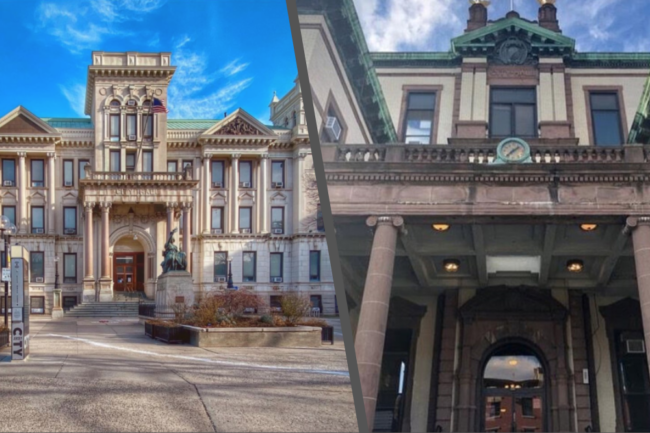
Hoboken
Hoboken Mayor Emily Jabbour is seeking public feedback on the upcoming budget. In an Instagram Reel posted on March 3, Mayor Jabbour said the City is facing a $17 million gap, and if no corrective action is taken, filling that gap could mean a 20% tax increase or about $700 for the average assessed Hoboken property.
Mayor Jabbour released a public survey, asking for feedback on the budget planning process from Hoboken residents. It asks for feedback on potential cost reductions, revenue opportunities, and priorities for City services and investments. The survey will remain open until Sunday, March 22nd, at 11:59PM. To make sure it’s accessible, the City’s Office of Senior Services will be available at the Multi-Service Center at 124 Grand Street, Monday through Friday from 9AM to 4PM. Seniors can also call the Office of Senior Services at (201) 420-2000 ext. 1093 or reach out to Constituent Services with any questions at (201) 420-2000 ext. 1081. Staff will help seniors who need assistance completing the survey.
In a statement released on March 9th, 2026, Mayor Jabbour added, “By launching this survey, we are giving residents a direct opportunity to collaborate with us and share their ideas about what services we should invest in, where else we can cut, and how we can responsibly generate revenue. Every tax dollar matters and public input will play a key role in helping us shape a budget that reflects the needs and values of our community.”
The budget will be introduced by the Mayor and must be approved by at least five members of the City Council to pass.


Read More: Hoboken Residents Are Fed Up With the City’s Dog Poop Problem
In Hoboken, your total property tax bill is usually divided into three roughly equal parts: municipality, the public school district, and Hudson County. Municipal taxes go towards city services, like paving roads, making up around one-third of the total property tax bill.

If there were a 20% municipal tax increase as the Mayor proposed, it does not mean your total property taxes go up 20%. The municipal tax increase would only apply to the city portion of a property tax bill, which typically makes up about 25–30% of the total in Hoboken. Assuming the school and county portions would remain unchanged, the overall impact would likely result in roughly a 5–7% increase in the total property tax bill.
Last year, the Hoboken City Council voted to approve a $150.26 million municipal budget, resulting in a 4.5% tax increase for residents.
The majority of residents in Hoboken rent their homes. It equates to nearly 63% of Hoboken locals. If there were an increase in property taxes, it would most likely trickle down and impact those renters. Landlords often pass those costs through rent hikes or tax surcharges.
The Hoboken Girl reached out to the Hoboken City Council to learn more about the budget process and possible tax increase. Below are the statements HG received from City councilmembers.
City Councilwoman Tiffanie Fisher, 2nd Ward
“I’m glad this year’s budget process is more transparent. As we work through the numbers, this is exactly the moment to focus on how we run the city better through operational changes and targeted cost cuts. That said, a tax increase is likely unavoidable, something I raised both during last year’s budget discussions and when I ran for mayor in 2025. At a time when affordability is already a concern given broader economic pressures, the focus now should be on making sure City Hall is run as efficiently as possible so residents know their tax dollars are being used wisely.”
Councilman Joe Quintero
“Back in August, when I voted in favor of Hoboken’s 2025 budget, I made it clear that I had serious concerns about how much we were relying on surplus to balance the books…The reality is the cost of running our city is not immune to inflation or market forces, and so in the past four years we’ve seen increases in the costs of everything from recreation to sanitation to public safety…So today we are faced with the difficult decisions of how we are going to generate more revenue and what we are going to cut to close the budget gap…Can this gap be closed by increasing taxes alone? Maybe… but we can all agree that a 20% increase is just too much. So, we are going to have to move forward with a combination of significant cuts and painful (but hopefully not too painful) tax and fee increases. On that front, I appreciate the path Mayor Jabbour has taken with respect to engaging our community in this process.”
City Councilman Dr. Michael Russo, 3rd Ward
“I’m not happy with the current budget planning process. The survey being used to justify decisions is flawed and will not fully reflect residents’ priorities. Before asking taxpayers to absorb an increase, the city needs to make drastic cuts throughout this administration’s budget and pursue clear, recurring revenue options, such as, but not limited to, responsible use of current parking utility revenue, ensuring all development agreements deliver fair value, and shared-services savings with the library. A property tax increase doesn’t only affect homeowners; it cascades through the entire local economy. Renters often experience it through higher rents or added surcharges as property owners pass along the increased costs. Local businesses, many of which already operate with high rents, narrow margins, and rising operating expenses, feel the impact as well. When taxes rise, those costs are frequently passed through in the form of higher prices, reduced hiring, or, in some cases, businesses choosing to relocate or close. The result is broader harm to residents, workers, and the city’s long-term economic vitality. Policies that increase the cost of living also run counter to the goal of making Hoboken more affordable for residents and small businesses. Tax or fee increases should therefore be treated as a last resort, not the first option.“
City Council Vice President Phil Cohen
“If Hoboken’s credit rating is downgraded, it will cost taxpayers millions when bonding for critical infrastructure improvements — like last year’s unanticipated need to address the collapsing and deteriorating bulkhead and seawall along Sinatra Drive. Now we must identify opportunities to enhance municipal revenues and responsibly reduce municipal expenses so we can minimize future property tax hikes. I look forward to hearing residents’ responses to the budget survey the City has issued. The survey remains open through Sunday, March 22nd, and will help guide us through this year’s budget-making process.”
City Councilman Paul Presinzano
“Hoboken is facing a projected $17 million budget gap. Still, strong leadership means using the tools already available and making uncomfortable decisions to control spending before turning to higher taxes or fees. Last election, nearly every campaign promised affordability, and residents deserve to see that promise honored. Tax hikes don’t just affect homeowners—renters can feel it too when landlords legally pass those costs along. With smart management, careful spending, and transparency, the City can close the gap while keeping the city affordable for everyone. ”
Jersey City
Mayor James Solomon of Jersey City reported that the City is facing a $250 million budget deficit. To combat this, Jersey City officials are warning residents that there could be a significant property tax increase, as the City is seeking $150 million in State emergency financial aid to stabilize its finances.
The Jersey City Times reports that in an application to the state Department of Community Affairs (DCA), Jersey City officials wrote, “we believe with transitional aid of $150 million in 2026, combined with a significant municipal tax increase, tighter controls on filling vacancies and a renewed effort to increase other sources of revenue through greater enforcement … the city will be able to find a path to a structurally balanced budget within three years.”
The application also reportedly says Jersey City is considering a hiring freeze and a “2 for 1” policy for filling vacancies. It also mentioned furloughs as a last resort. If Jersey City receives no aid, the application reportedly says the City “will make $16.17 million in layoffs: 5% of public safety staff, 15% of public safety overtime, 10% of all other city staff and 20% of all other overtime.” The Jersey City Mayor’s Office tells HG that the application spelled out what would happen if Jersey City did not receive aid, and all these remain hypothetical. The City is conducting a series of public town halls and wants to continue engaging with the public throughout the entire budget process.
See More: Mayor of Newark Launches Public List of the City’s Worst Landlords
During a Jersey City Ward B Town Hall Meeting on March 10, Mayor Solomon shared, “There’s no way we can get through this without the state’s support and help.”
He went on to say, “If we were to lay off every single civilian employee, so you’re talking about the entire public works department, the entire law department, the entire health department, the entire rec department, every single one, that wouldn’t even get us to half of this deficit.”
Even with the State aid, Jersey City could face one of the largest municipal tax increases in recent years.
“If we are getting the state support that we are hoping to get, there will still be difficult, tough choices,” said Mayor Solomon. “We will still have to increase property taxes somewhat in the first year and we will have to not fill vacancies that we have in the city.”
“We are taking action. We saved $30 million in health care spending in our first month, and the Mayor is going through every department to find both savings and ways to provide services more efficiently,” Nathaniel Styer, Communications Director for the City of Jersey City, shared in a statement to HG. “The working people of Jersey City have experienced steep rises in taxes and rents, and it isn’t fair to them to bear the entire burden of fixing Steven Fulop’s budget mess. While no budget decisions have been made, we are clear-eyed that the solution out of this mess is a combination of state aid, spending cuts, and increased taxes. Our goal is to ensure that working residents are protected the most.”
Follow @thehobokengirl on Instagram + TikTok for the latest Hoboken and Jersey City updates, sign up for our weekly newsletter here that shares everything you missed each week, and check out our events calendar, which has over 100+ events weekly to peruse.