Danielle Farina
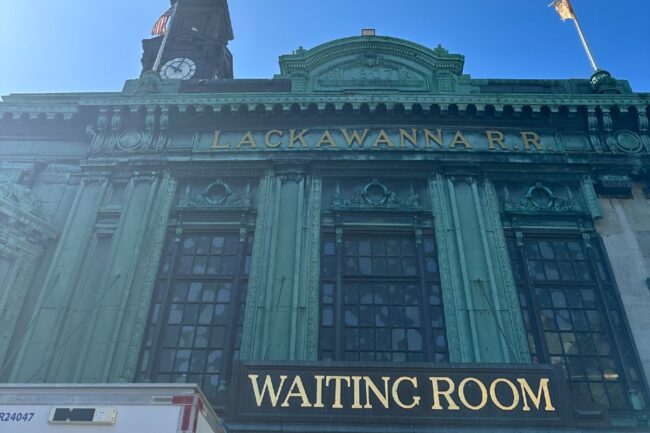
Much like the city itself, Hoboken’s Terminal is at once both a material display of history and a glimpse into the future. Nearly 50,000 commuters pass through daily, with a constant (though usually delayed) stream of ferries, trains, and buses traveling to and fro. For many of us here, the terminal is so integral as to almost be overlooked — no matter who you are in town or what you do, you’ve likely used the terminal at some point to get somewhere.
Still, with a history dating back over 100 years, the Hoboken Terminal is a wonder of architecture and innovation. It’s also decaying.
In October 2022, local and state officials launched the Hoboken Connect project, an initiative aimed at restoring the historic aspects of the terminal and revitalizing the space to serve as a community hub. The project is ambitious, expected to reach completion by 2029 at the earliest. In April 2025, just three months before ground broke in July, The Hoboken Girl took a tour of the defunct ferry terminal. We were also keyed into how this historic landmark will change (and remain the same) in the coming years. Keep reading for a peek into the old Hoboken Terminal, and a look ahead at what it will soon become.
A Quick History Lesson
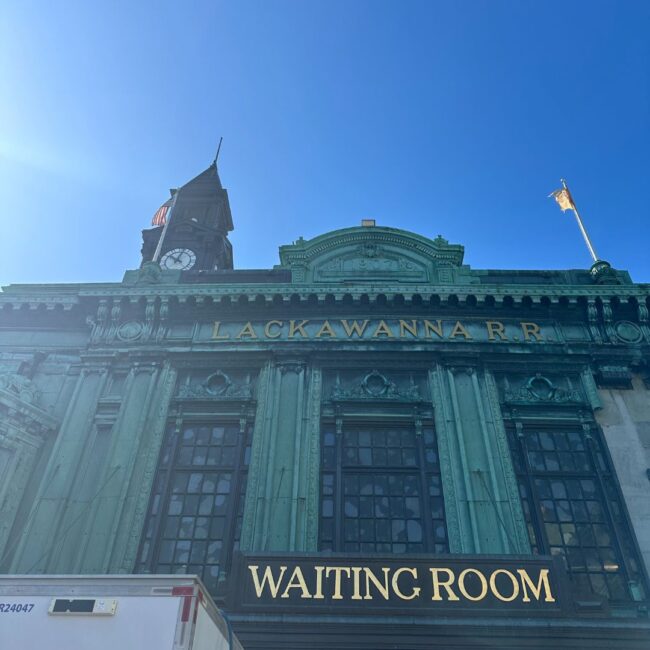
The Hoboken Terminal we see today was erected in 1907, built by the Delaware, Lackawanna, and Western Railroad. Its original design was nothing short of opulent, with “a Tiffany stained-glass skylight and bronze chandeliers,” per The New York Times. At one point, there was even an upstairs restaurant that served over 250 people.
Beyond its bells and whistles, many of the terminal’s features were reactive and precautionary strokes of ingenuity. Lincoln Bush, the head engineer on the project, created an entirely new form of train tent that helped mitigate train exhaust, which was later adopted by nearly all train stations in the country. Per NYT, “Kenneth Murchison, the architect hired by the railroad, took steps to make the building fireproof. The five-inch-thick walls were made of concrete and covered the facade in copper.”


Read More: Hoboken to LA by Rail? This Transit Company is Proposing a Single Cross-Country Route
Everything from the original floor plan to the mahogany woodwork makes the landmark an architectural wonder, but much of the terminal has been untouched and unused for decades, especially the ferry terminal building. Of course, other parts of the site have seen their fair share of renovations over the years, the most recent spate after Hurricane Sandy in 2012.

Despite its dazzling beginnings, many Hoboken residents now see the terminal not as a glamorous display of innovation, but as the point of origin for their transit troubles and tragedies. Hurricane Sandy devastated the site in 2012. In 2016, an NJ Transit commuter train crashed, leaving one dead and 114 injured. In 2024, NJ Transit delays were so severe that passengers were given a free week of rides. And just this year, the Hoboken PATH station closed for an entire month. The terminal may not be directly responsible for the failings of our transit systems, but it is the living, breathing organism through which they function. We are all impacted by it, for better or for worse.
In October 2022, local and state officials launched the Hoboken Connect project, but plans to revitalize the space had been in development for some 16 years prior. This project is a public-private partnership between NJ TRANSIT, LCOR, and the City of Hoboken and aims to upgrade unused spaces inside the terminal while maintaining its historic design.
A Last Look
In April of 2025, LCOR took The Hoboken Girl on a tour of the ferry terminal building, one of the main sites of redevelopment in the Hoboken Connect project. It comprises 16,000 square feet of the property, but has been largely unused for decades, and as a result, has fallen into disrepair.
This space has been closed off since the ‘60s, when the construction of bridges and tunnels led to declining ferry service. Ferry service, of course, has since resumed, but much of the massive space has sat defunct and decaying. It’s going to be a while before anyone gets to see or use this space again, so what you’re looking at here is really a snapshot in time. We know a lot of you have probably been curious about what it looks like right now, and this is that peek. And of course, we at Team HG are right here too: living, working, and noticing these changes alongside you.
Here’s some of what we saw.
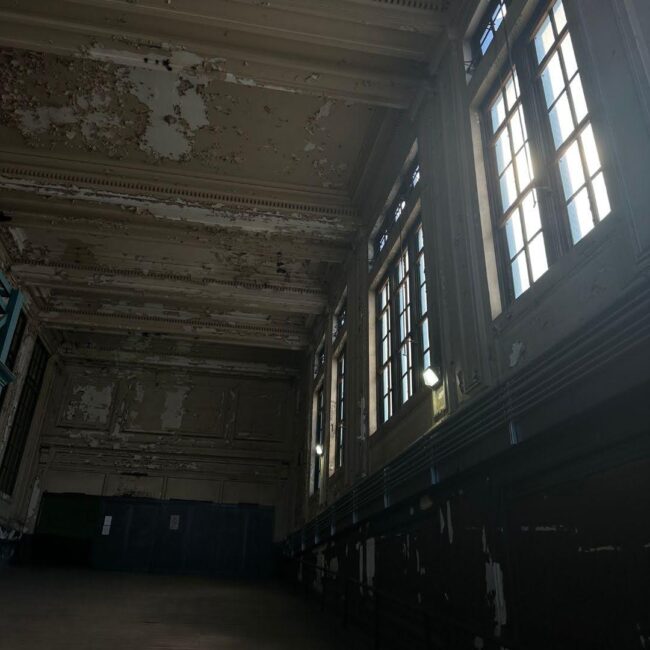
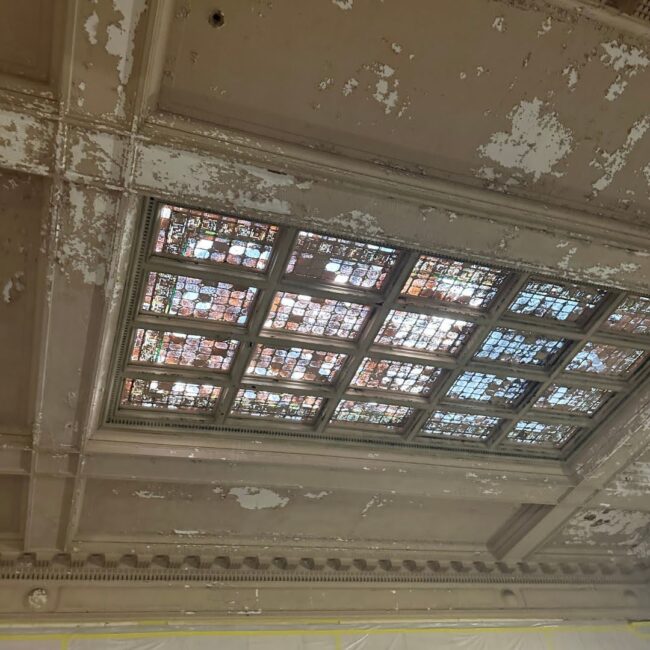

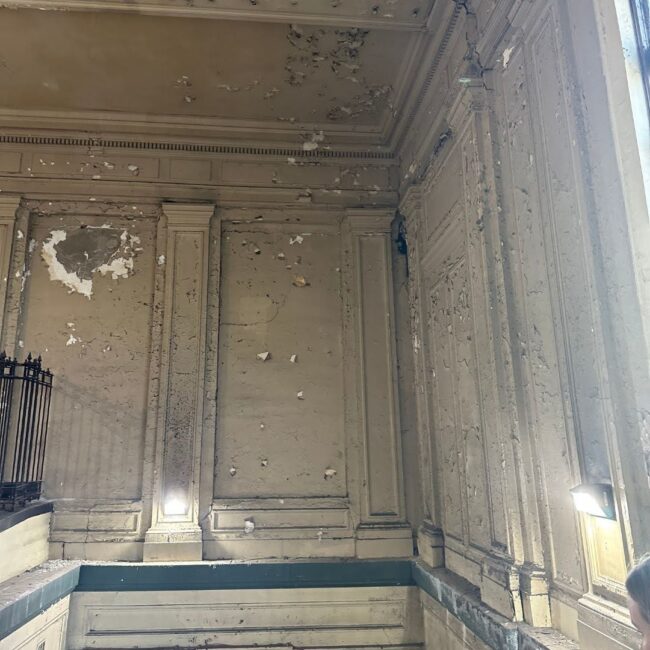
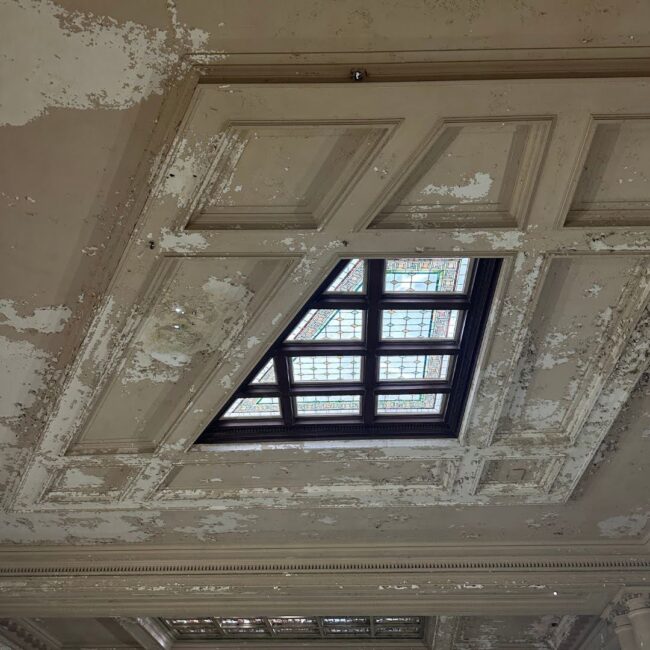
Walking through the terminal, it was clear that this isn’t just another glossy construction project in Hoboken (and there are many), but one that will impact every person who lives here.
It was also clear that something of this grandiosity and detail — the copper exterior, the Tiffany skylights — just wouldn’t be created today. Brian Barry, Senior Vice President of LCOR, shared that this is the main goal of the project: “to take it back 100 years, but modernize it.” The team has even hired specialty artisans to work on restoring some of these intricate, old-school elements.
So, What’s Next?
The Hoboken Connect project is expansive, covering a total of 65 acres in town. Beyond the terminal, the project will also introduce a new office building, residential apartments (with 20% dedicated to low-income residents), and retail sites. We’ve covered all of that at length here, but as far as the terminal goes, here’s a breakdown of the forthcoming upgrades.
- Historic Restoration: led by a restoration architect who also worked on Grand Central, the project will bring the terminal’s century-old craftsmanship back into the spotlight, revitalizing key aspects of the ferry terminal’s character like the copper detailing, skylights, iconic signage, and the roof.
- The Second Floor: a key component of the project is the rehabilitation of the second floor, which will be open to the public for the first time since the ‘60s.
- Retail + Event space: the ferry terminal will also be home to a new retail and event space on its first and second floors. NJ Transit will program the space as they see fit, and has not made plans public yet.
- Warrington Plaza + Hudson Place: a public, outdoor pedestrian plaza with a bike lane and flood-prevention infrastructure.
See More: 11 Amtrak Train Trips via Newark Under 4 Hours
Like we said earlier: 50,000 commuters pass through the Hoboken Terminal daily, which means one of those commuters is likely you, or your neighbor, or your neighbor’s neighbor. For the rest of the world, this project is a feat of architectural and historical preservation — but for our community, it carries a lot more weight for our future and where (literally) we’re going next.
We’ll have routine updates on the progress of the project to keep our readers informed. For now, follow @thehobokengirl on Instagram + TikTok for the latest Hoboken and Jersey City updates, sign up for our weekly newsletter here that shares everything you missed each week, and check out our events calendar, which has over 100+ events weekly to peruse.