Eliot Hudson
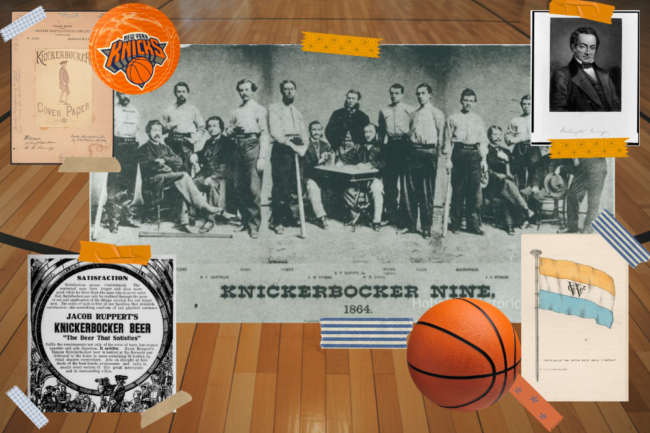
The New York Knicks have everyone buzzing like a countdown clock klaxon, yet few realize the Knicks are rooted in New Jersey just as much as their Jersey-born stars, Jalen Brunson and Karl-Anthony Towns. Hudson County is interwoven within the very DNA of the Knickerbockers, and Hoboken was where the Knicks first began their sporting Tip-Off. Read on for more about the Knicks’ Hoboken connection.
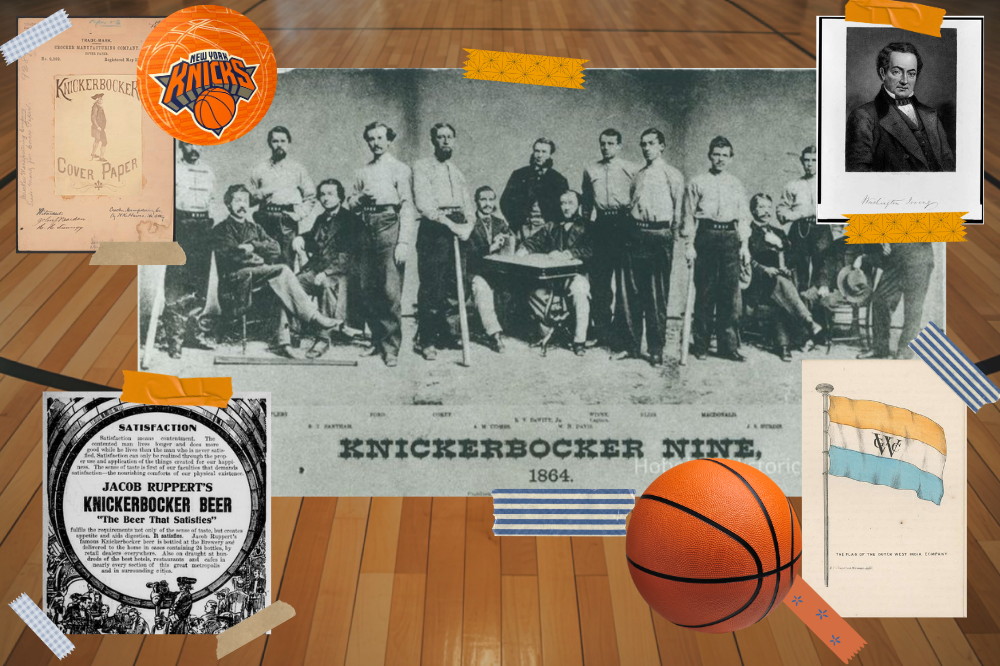
What is a Knickerbocker?
The name Knicks derives from the term Knickerbocker, a moniker with a long history launched by Washington Irving, the author of American classics like Sleepy Hallow (1820) and Rip Van Winkle (1819).
Before penning the aforementioned masterpieces, Washington wrote a satirical book, A History of New York: From the Beginning of the World to the End of the Dutch Dynasty (1809) under the pseudonym Diedrich Knickerbocker, a name borrowed from Washington’s real-life friend in Albany, Herman Knickerbocker.
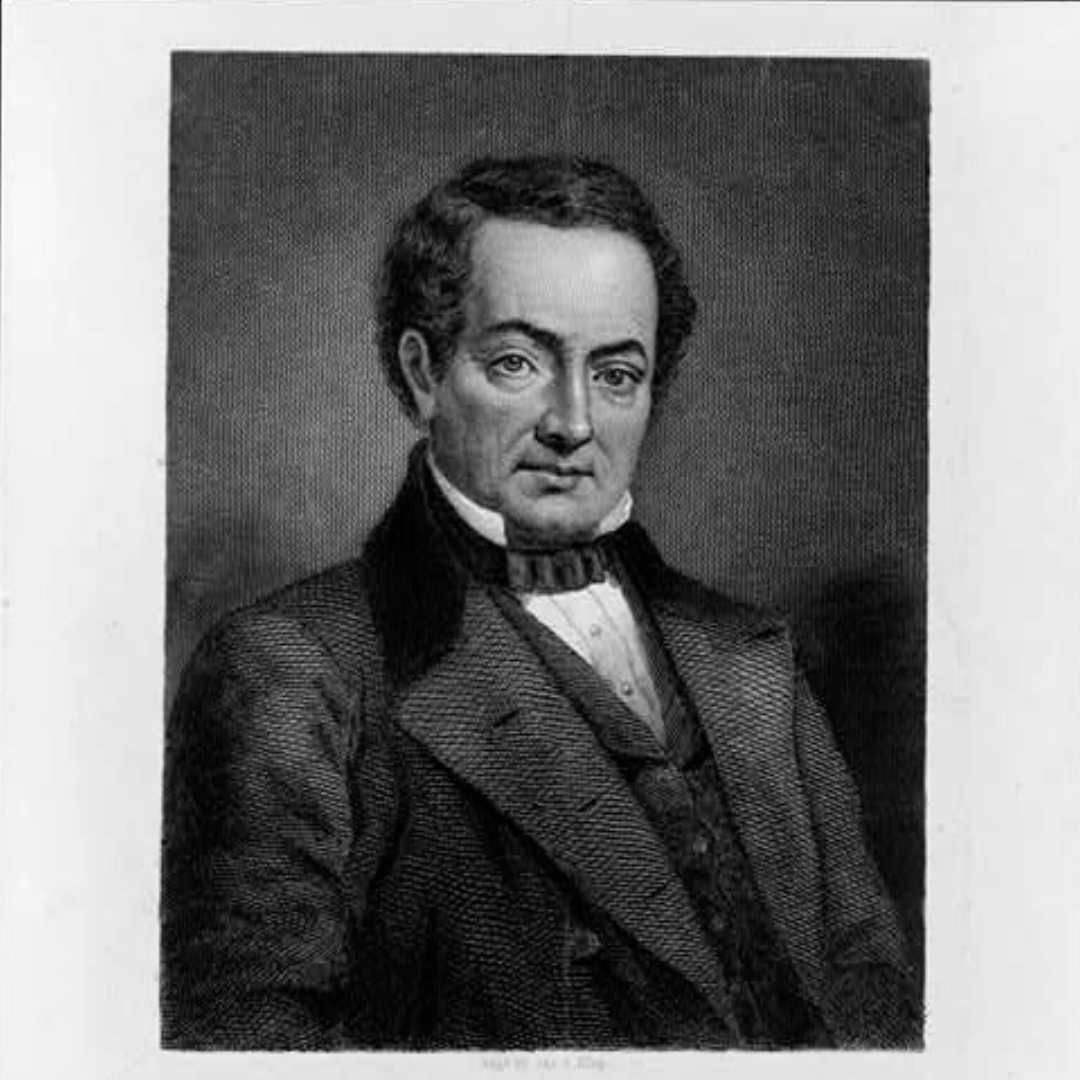 Washington Irving, c. 1879, courtesy of the Library of Congress
A History of New York marked the first time the public became introduced to the name of the fictitious author, Knickerbocker, an old-timey alias equally whimsical and memorable. In this very first presentation of Knickerbocker, Washington illustrated his interest in Hudson County, describing the surrounding hamlets as “the would-be cities of Jersey, Harsimus, and Hoboken, which, like three jockeys, are starting on the course of existence, and jostling each other at the commencement of the race.”


Read more: Stevens Park: The Little Hoboken Park with a Big History
Soon, Irving found himself traveling to Hoboken often, to visit his lifelong friend, John Jacob Astor, the richest man in America, and a Hobokenite who built Astor Villa in 1829 at today’s 2nd and Washington Streets in Hoboken. The two would go on to have a relationship as enduring and endearing as the Knicks’ Jalen Brunson and Josh Hart, all the while infusing Hudson County into Knickerbocker lore.

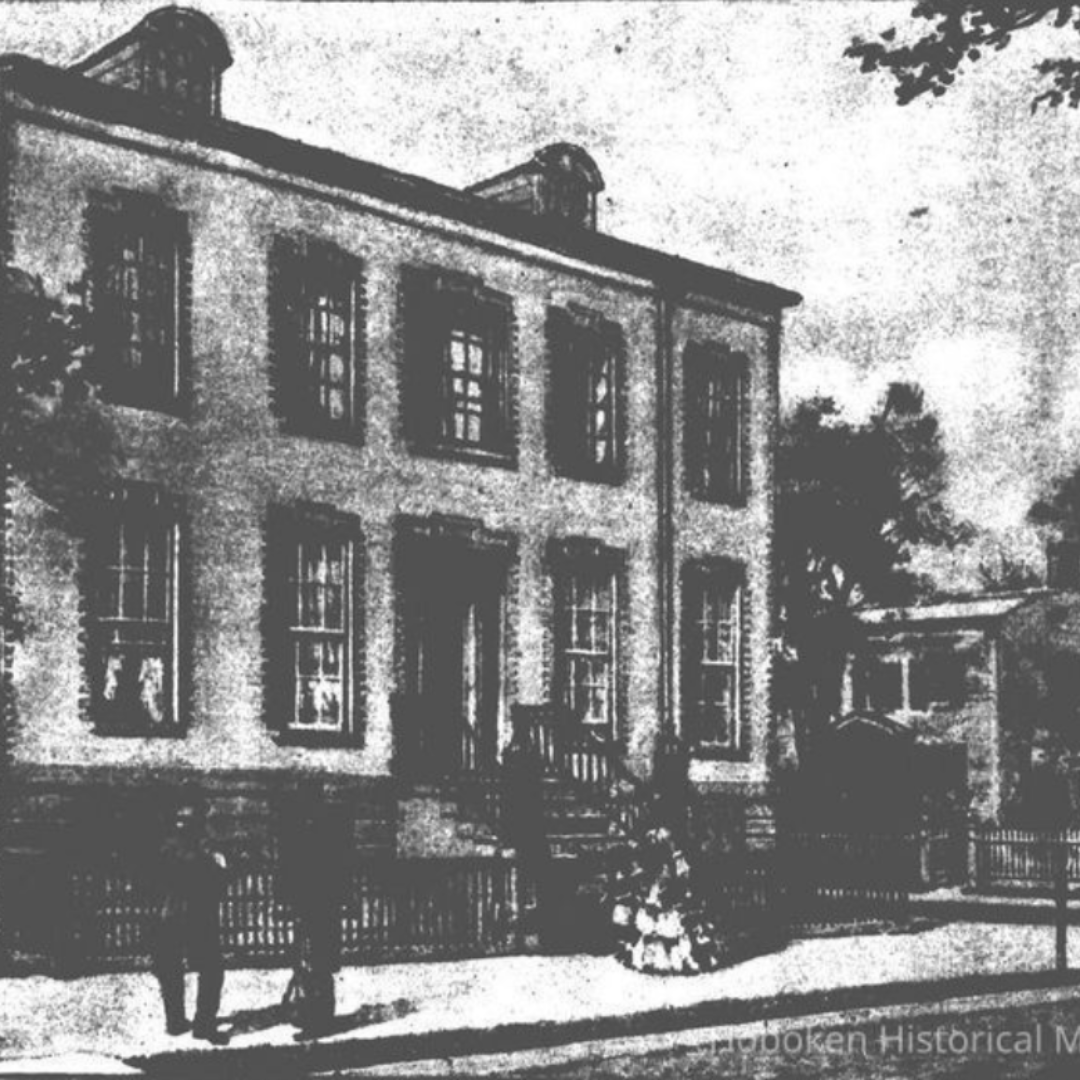
Astor Villa in Hoboken. Image courtesy of the Hoboken Historical Museum
Irvings’ excursions to Hoboken kindled an infatuation with the area’s colonial, Dutch past, evidenced in Communipaw’s repeated appearances in Knickerbocker stories, such as: Communipaw, A Legend of Communipaw, Guests from Gibbet-Island, and Conspiracy of the Cocked Hats—all penned by the famously fictional Father Knickerbocker who goes so far as to proclaim that Communipaw “may truly be called the parent of New-York.”
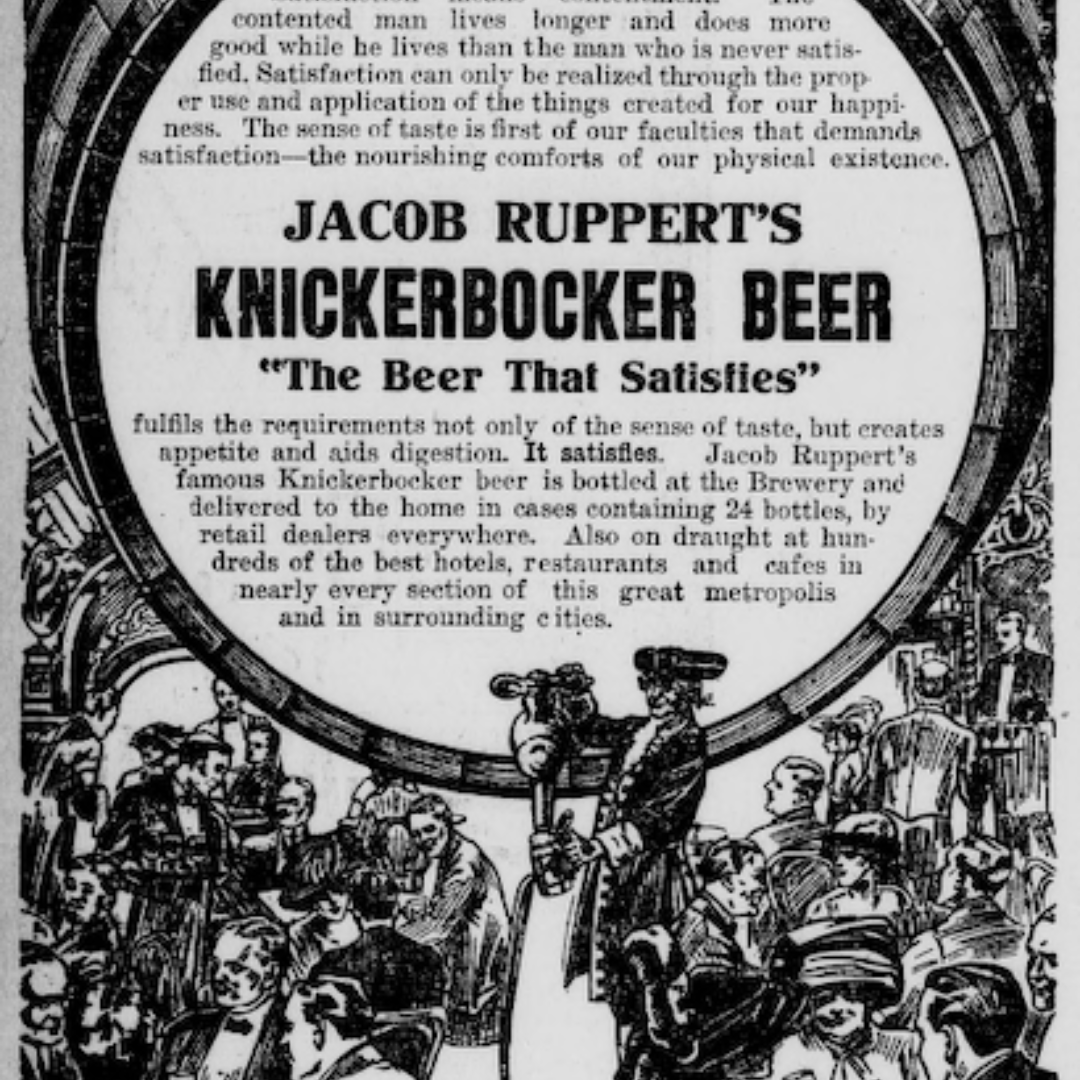 The New Haven Union (New Haven, Conn.), August 22, 1911. Image courtesy of the Library of Congress
Soon, the fanciful Knickerbocker name took on a life of its own, powering forward like Karl-Anthony Towns in the paint, and everything from omnibuses to subway stations, beer brands to hospitals, hotels, theaters, and Trust Companies began to bear the name Knickerbocker, engendering a quaint and nostalgic connotation for anything vintage New York.
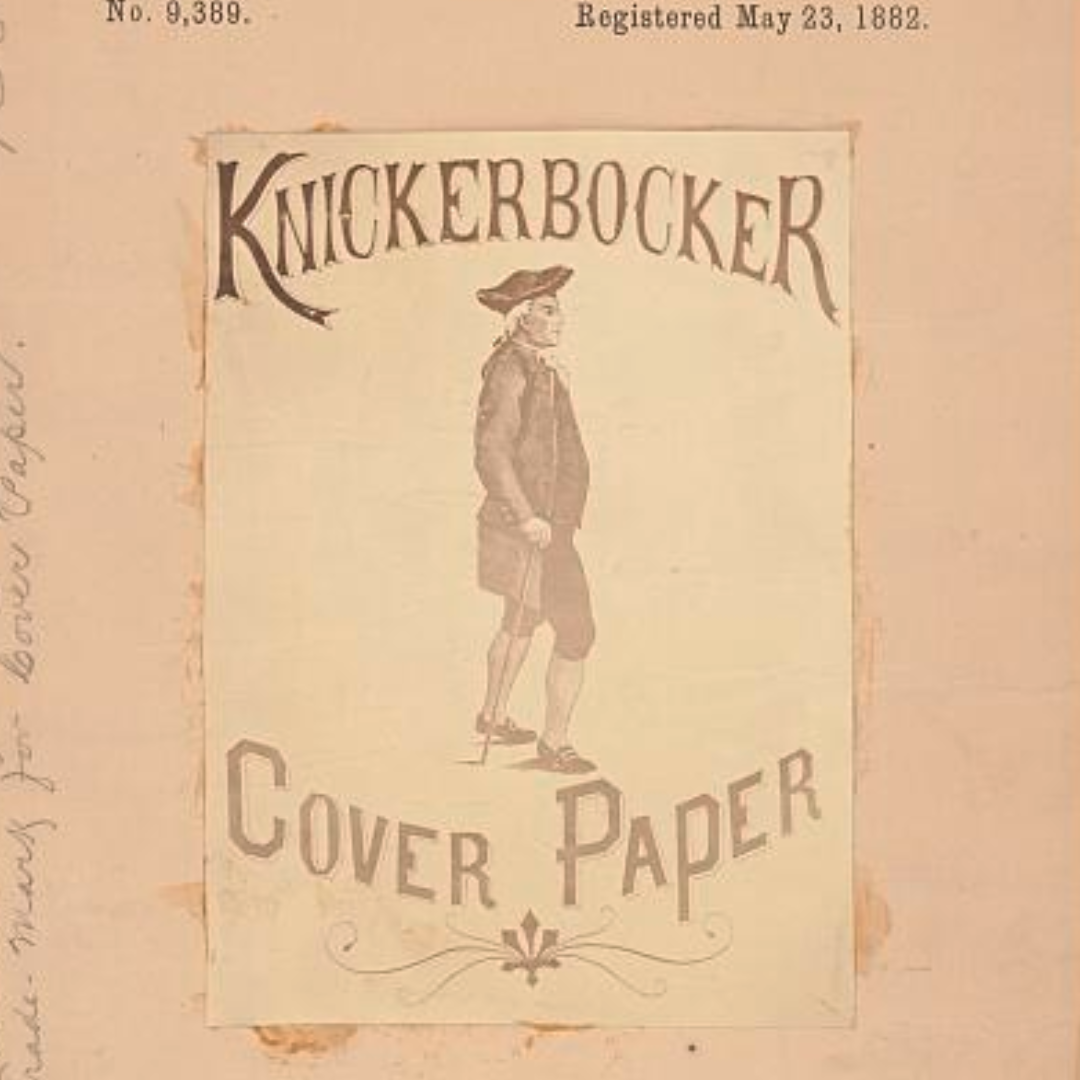 Trademark application for Knickerbocker Cover Paper, 1882. Image courtesy of the Library of Congress.
The old-fashioned name soon began to describe a new-fangled form of trousers, known as Knickerbockers, baggy pants gathered and banded at the knee, which men enthusiastically adopted around 1860. In an era with clothing as rigid as its etiquette, Knickerbockers allowed unprecedented mobility and became a mainstay of sportswear by the late 19th Century. Interestingly, an abbreviation of the term also became synonymous with women’s undergarments: knickers.
The OG Knickerbockers of Hoboken
Aside from highbrow literary connections (or sultry underwear associations), Hoboken became the original home field of the very first sports team in history to bear the Knickerbocker brand name.
See more: 7 Inventors of Pretty Cool Inventions From Essex County, NJ
When the Father of Baseball, Alexander Cartwright, fielded and founded a team to establish the newly emerging game of Baseball, he decided to name his team the Knickerbocker Base Ball Club of New York, and held the famed inaugural game on June 19, 1846, in Hoboken’s Elysian Fields. Today’s Knicks fans may pray the modern iteration fares better than the OG Knickerbockers did in their first game, losing 23 to 1 against the New York Nine.
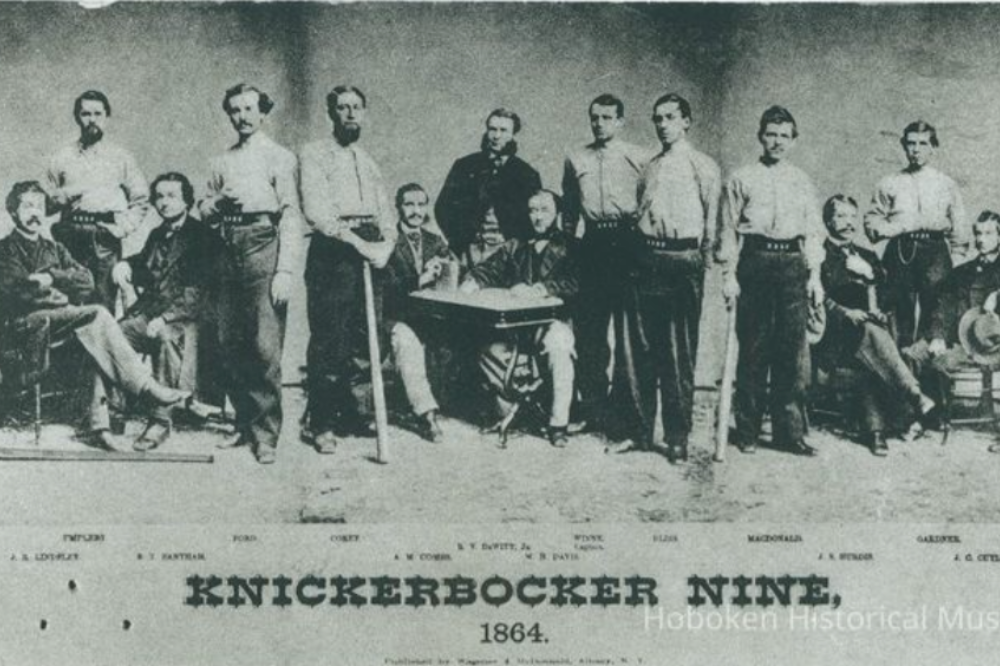
The Knickerbocker Nine. Image courtesy of the Hoboken Historical Museum.
Hoboken became the home field of the Knickerbocker Nine for 20 seasons, from 1845 through 1865, before professionalism initiated the demise of club competitions (more generally) and the Knickerbockers (more specifically) in the 1870s. As New York City’s preeminent sporting ground, the Elysian Fields may well have hosted basketball tournaments, but by the time Dr. James Naismith invented the game one cold December day of 1891, in chilly Springfield, Massachusetts, the legendary Elysian Fields had succumbed to urbanization, industrialization, and competition among new venues materializing throughout New York City, fading away like a Mikal Bridges jumper.
In A New York Minute, Everything Can Change
The Knickerbockers of Hoboken eventually gave the Alley-Oop to the New York Knicks, who appropriated the name 100 years later in 1946. In the mid-20th Century, college basketball’s growing popularity prompted the creation of professional leagues, zealously backed by promoters mounting a full-court press to make a fortune by filling empty hockey arenas on off-nights.
View this post on Instagram
As legend has it, college basketball promoter and president of Madison Square Garden, Ned Irish, wrestled control over a yet-to-be-named New York City basketball franchise. Ned assembled a staff meeting to mull over potential names which were cast into a hat. After tallying the votes, the Knickerbockers emerged as the name that would carry the torch for new generations of sports fans ever after.
Hudson County’s Historic Orange and Blue
Today’s Orange and Blue sported by the Knicks even flew over Ol’ Hudson County for 54 years, only 4 centuries earlier. The Dutch West India Company, and the Dutch, by extension, initially claimed much of today’s New Jersey as New Netherland, brandishing the Prince’s Flag, which showcased the colors orange, white, and blue – colors today associated with the Knicks, Mets, and both New York City and New York State’s flags.
Washington Irving (or Father Knickerbocker) referred to this very same flag (called a standard) billowing over Communipaw when he wrote: “the ancient and renowned village of Communipaw, which, according to the veracious Diedrich [Knickerbocker]…was the first spot where our ever-to-be-lamented Dutch progenitors planted their standard and cast the seeds of empire…”
View this post on Instagram
Therefore, the Knicks colors, name, and history are inextricably linked to Hoboken and Hudson County where they first originated.
SIDE NOTE: New Jersey’s flag displays its seal over a very specific shade of yellow chosen by General George Washington to distinguish New Jersey regiments during the Revolutionary War. This specific shade of yellow is known as “buff,” and New Jersey has been buff ever since.
Follow @thehobokengirl on Instagram + TikTok for the latest Hoboken and Jersey City updates, sign up for our weekly newsletter here that shares everything you missed each week, and check out our events calendar, which has over 100+ events weekly to peruse.