 Carli Clesmere
A gastrointestinal illness called cyclosporiasis is being reported across the United States, including in New Jersey. As of July 9th, 2026, the CDC had confirmed 843 domestically acquired cases and was reviewing more than 1,500 additional illnesses. New Jersey health officials said the state is seeing normal seasonal activity, with no known clusters or outbreaks as of July 10th. Read on for what to know about symptoms, case numbers, + when to contact a healthcare provider.
What Is Cyclospora?
Per the New Jersey Department of Health, cyclosporiasis is an intestinal illness caused by a microscopic parasite called Cyclospora cayetanensis. People generally become infected after consuming food or water contaminated with the parasite. In the United States, previous illnesses and outbreaks have frequently been connected to fresh produce. Cyclospora rarely spreads directly between people because the parasite needs time outside the body to become infectious. Cases occur year-round but typically rise from May through August, peaking in June and July.
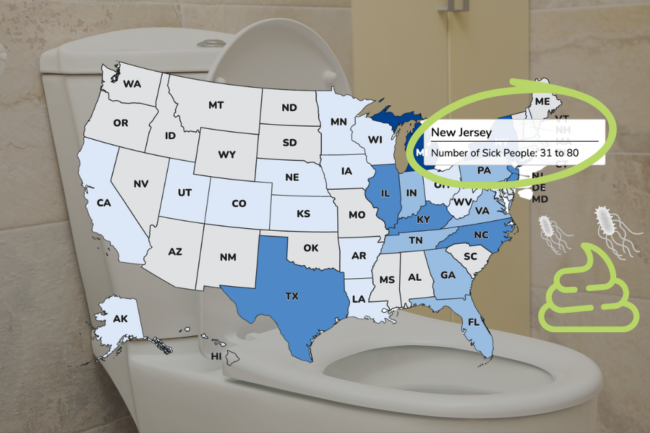
According to NorthJersey.com and the CDC, New Jersey has reported between 31 and 80 cases of cyclosporiasis, but state health officials are not calling it an outbreak. So, what actually makes something an outbreak? A higher case count alone is not enough. Health officials need evidence that multiple cases are connected to the same source, exposure, food, or location.
For now, the New Jersey Department of Health says the state is seeing normal seasonal circulation of the illness, with no known cluster or common link between cases.


Read More: Where to Find Cooling Centers in Hudson County
What Are the Symptoms of Cyclosporiasis?
The most common symptom of cyclosporiasis is frequent, watery diarrhea. The diarrhea can be severe and is sometimes described as explosive.

According to the CDC, additional symptoms can include:
- Loss of appetite
- Weight loss
- Stomach cramps
- Bloating
- Increased gas
- Nausea
- Vomiting
- Fatigue
- Body aches
- Headaches
- Low-grade fever
Symptoms typically begin about one week after exposure, although a person can become sick anywhere from two days to two weeks or more after consuming the parasite. Without treatment, symptoms can continue for a few days to a month or longer.
How Many Cyclospora Cases Have Been Reported In the US + NJ
As of July 9th, 2026, the CDC had received reports of 843 confirmed domestically acquired cases of cyclosporiasis across 31 states. Of the 843 people included in the national count, 86 were hospitalized, and no deaths were reported. The CDC’s national map places New Jersey within the range of 31 to 80 confirmed cases.
Federal officials also said more than 1,500 additional cases require further review to determine whether they were acquired domestically. Case totals are expected to increase because there can be an approximately six-week delay between the beginning of a person’s illness and the case being included in federal reporting data.
What Should You Do if You Have Symptoms?
Anyone with ongoing symptoms should contact a healthcare provider. Diagnosis may require multiple stool samples and a specific test for Cyclospora. Treatment usually includes a prescription antibiotic, along with rest and plenty of fluids.
See More: New Jersey Ranked the Third-Loudest State in the U.S.
How to Report a Possible Food-Related Illness
People who believe they became sick after eating a particular food or visiting a restaurant can report the concern to their local health department. The CDC’s cyclosporiasis surveillance page includes updated national case information and resources for reporting suspected foodborne illnesses.
Follow @thehobokengirl on Instagram + TikTok for the latest Hoboken and Jersey City updates, sign up for our weekly newsletter here that shares everything you missed each week, and check out our events calendar, which has over 100+ events weekly to peruse.