Kerrie Joyce
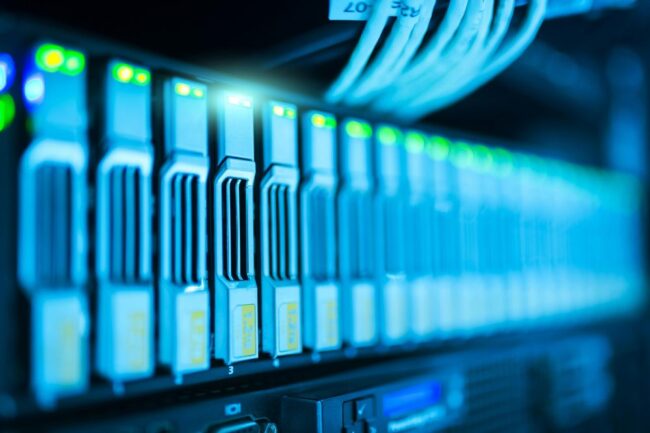
A new data center facility, NY3, has been built in Secaucus, New Jersey. The center, built by CoreSite, is intended to support the company’s other New York-area data centers, NY1 in Manhattan and NY2 in Secaucus. CoreSite announced the completion of its most recent facility, NY3, on September 25th, 2025. The enormous center spans across more than 138,000 square feet. The center will have liquid-cooling capabilities to enable AI platforms’ speed and overall performance. Data centers with cooling technology like NY3 have been popping up around the country to meet AI software’s electricity demands, accompanied by concerns about energy and water consumption. Read on for more information regarding the new center in Secaucus and its potential impact in Hudson County, New Jersey.
What is the Purpose of the Center?
Data centers like NY3 house servers to support increased energy demands from advanced, high-speed technologies, including generative AI platforms. Some of CoreSite’s NY3 center’s features include AC and DC power availability, server storage in cabinets, cages, and private suites, cooling capabilities, high security, and Open Cloud Exchange. Open Cloud Exchange (OCX) is an interconnection platform that allows users to access data from multiple clouds, like Google Cloud, Amazon, and Microsoft, without the need to move their data from one cloud to another, which the company says speeds up performance and eliminates costs.
Read More: Jersey City Schools Ban Technology in Class
Since the servers are handling massive amounts of user traffic, they can overheat just like a laptop or smartphone can on occasion due to overuse. To ensure 24/7 connection and speed of service, data centers have had to implement different kinds of cooling technologies to keep servers running. Some of these technologies include air-based approaches, which often use fans, and liquid-based approaches, which use water. The cooling technologies employ dielectric fluids, which conduct thermal but not electrical energy, to transfer heat from servers to water; that way, there is no need to “put it in rice.”
Cooling methods include direct-to-chip and immersion cooling, which the Environmental and Energy Study Institute states are best for reducing freshwater consumption. Still, the Institute asserts that large data centers can use up to five million gallons of water per day. The CoreSite center is Secaucus will use CRAHs, Computer Room Air Handlers, and ultrasonic humidification.


CoreSight was contacted for comment and this article will be updated with additional details.
Community Impact
The New Jersey Senate Legislative Oversight Committee testified in March of 2025 amid concerns from residents living near the new centers about the impact on their energy bills. At the hearing, Ed Gray of PSE&G reported a steep increase, from 400 megawatts to 4,700 megawatts, in interconnection requests in one year, noting that the rise in energy costs is being driven by a “lack of generation supply to meet expected demand for electricity.” PJM Interconnection also noted a need for additional generation.

Senator Bob Smith, co-sponsor of legislation S-4131, suggested that AI data-centers ought to be responsible for their own energy supply, “I’m not trying to pick on an industry — we’d love to have AI here — but they’re making the ratepayers pay for the upgrades to the grid that are required by them — that’s just not fair, and our ratepayers are going to see it that way,” he said.
Senator John Burzichelli echoed this sentiment, saying, “It’s frustrating for people when they open their bills. And, as we understand it, I’m in the Atlantic City Electric service territory. A significant portion of my bill is on the generation side. I want to say 65%-plus; others will speak today and will confirm that.”
Senator Smith’s bill would require all AI data centers in the state to source energy from Class I renewable energy sources, minimize energy usage, optimize water usage, and utilize computer-generated heat for water and space heating in the center and adjacent buildings. The legislation would also require centers to submit an energy usage plan to the Board of Public Utilities (BPU).
See More: 18 Montclair Area News Stories This Week
The Senate Environment and Energy Committee voted favorably on the bill in March, and it was last amended in June of 2025.
Follow @thehobokengirl on Instagram + TikTok for the latest Hoboken and Jersey City updates, sign up for our weekly newsletter here that shares everything you missed each week, and check out our events calendar, which has over 100+ events weekly to peruse.